

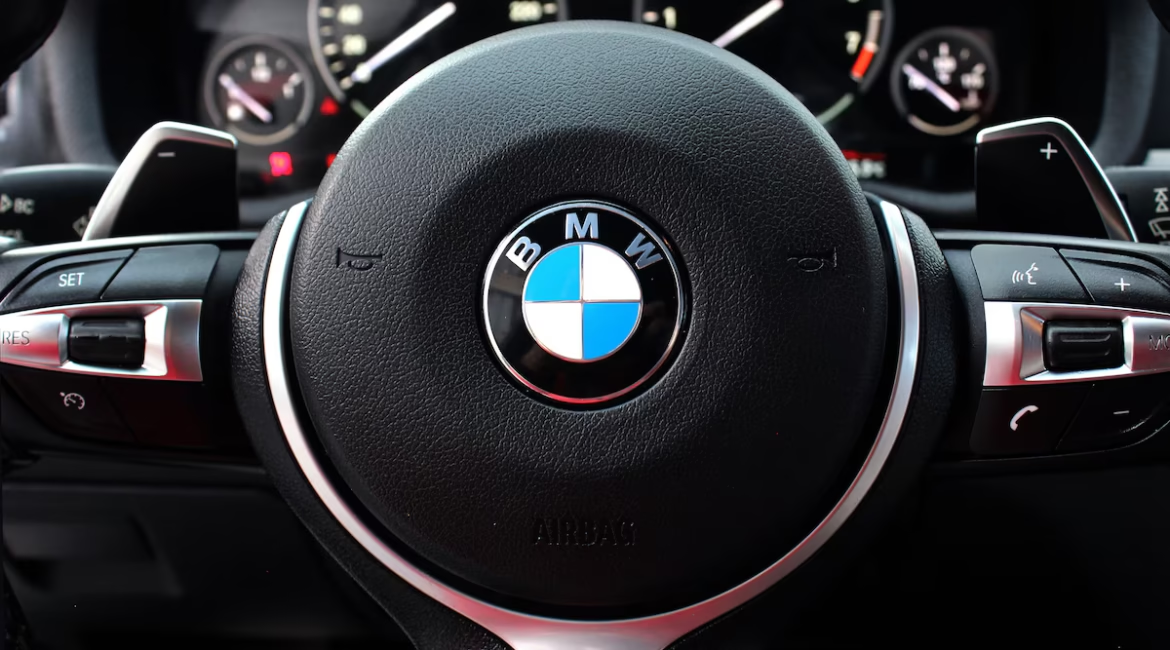
We’ve all been there, driving along, music playing, maybe on our way to work or an errand, when suddenly that small orange check engine light pops up on your dashboard. Your heart drops a little, and you think, “What now?”
If that sounds familiar, don’t panic. The check engine light is one of the most common warning indicators in any vehicle, but it doesn’t always mean disaster. Still, ignoring it can lead to costly repairs later. In this guide, we’ll walk you through exactly what to do when your check engine light comes on, what it might mean, and how a trusted auto repair shop in New York like MB Automotive can help you get back on the road safely.
Understanding What the Check Engine Light Means
The check engine light (often abbreviated as CEL or MIL – Malfunction Indicator Lamp) is part of your car’s onboard diagnostics system (OBD-II). Its job is to alert you when the vehicle’s computer detects a malfunction in the engine, emissions, or drivetrain system.
Think of it as your car’s way of saying, “Something’s wrong, check me out.”
This light can appear for something as simple as a loose gas cap or as serious as a failing catalytic converter. That’s why understanding the level of urgency and what steps to take next can make all the difference.
Step 1: Stay Calm and Observe
When your check engine light first comes on, don’t panic. Unlike oil pressure or temperature lights, the check engine light isn’t usually an emergency. However, how you respond depends on how the light behaves:
- Solid Light – Indicates a non-urgent issue, but still one that needs attention soon. Your car is likely safe to drive for now, but don’t ignore it.
- Flashing Light – This is a warning of a severe problem, such as an engine misfire that could damage the catalytic converter. In this case, you should pull over safely and stop driving immediately.
If you notice other strange symptoms such as shaking, loss of power, or strange noises, it’s best to have your vehicle towed to a professional auto repair shop in NY as soon as possible.
Step 2: Check for Obvious Problems
Before bringing your car in, perform a quick inspection. Sometimes, the issue is simple and can be fixed in minutes:
- Tighten the gas cap. One of the most common causes of a check engine light is a loose or damaged gas cap. Remove it, retighten it until you hear a few clicks, and drive for a bit. If the light turns off after a few cycles, problem solved.
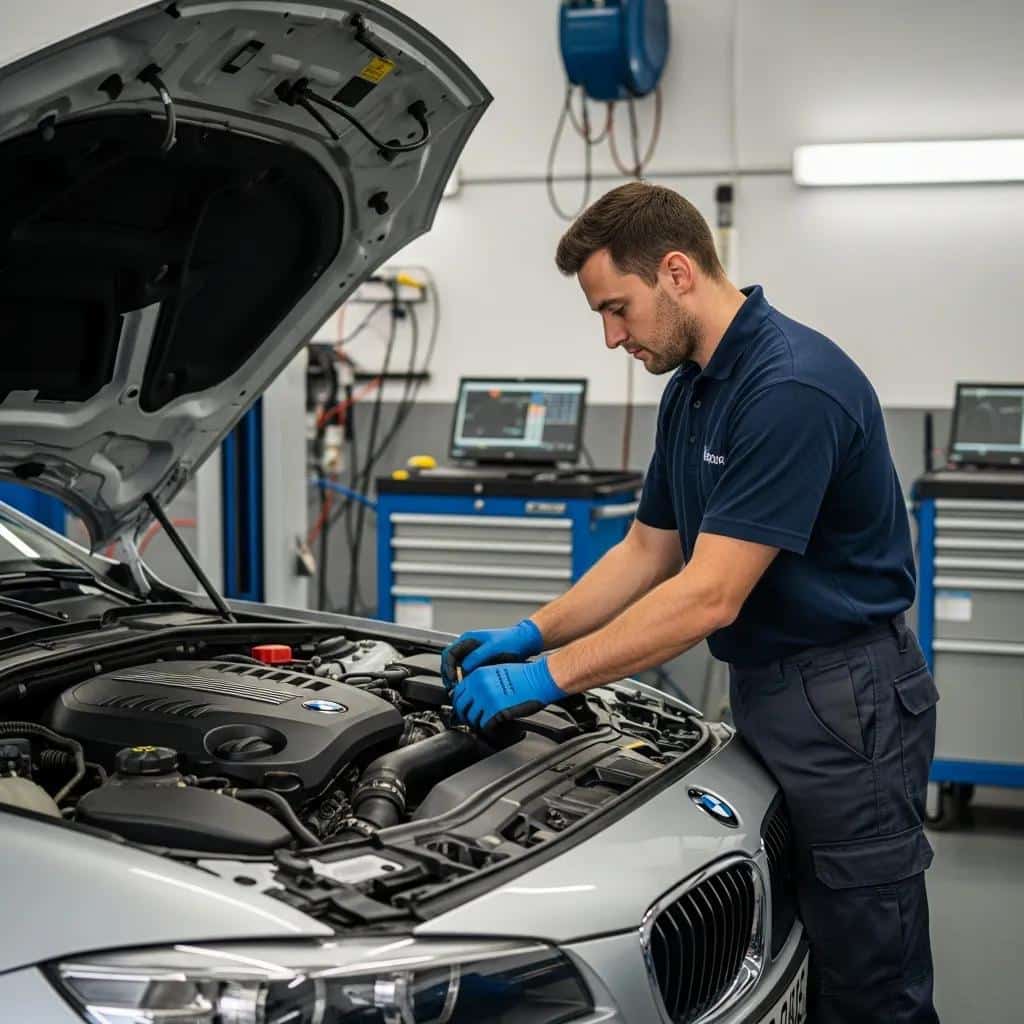
- Look under the hood. Check for loose wiring, disconnected hoses, or anything visibly out of place.
- Monitor unusual behavior. Poor acceleration, rough idling, or poor fuel economy can indicate underlying issues such as spark plug trouble or sensor failure.
These quick checks save time and sometimes prevent unnecessary repairs.
Step 3: Use a Diagnostic Scanner (If You Have One)
If you’re comfortable with basic car maintenance, consider using an OBD-II scanner. These affordable tools plug into your car’s diagnostic port (usually under the steering wheel) and read the error codes that triggered the light.
Common codes include:
- P0171 – System too lean (possible air/fuel issue)
- P0300 – Random/multiple cylinder misfire detected
- P0420 – Catalytic converter efficiency below threshold
Reading these codes helps you understand the general problem, but a professional mechanic is still the best person to interpret them accurately and recommend safe repairs. At MB Automotive in New York, our technicians use advanced diagnostic systems that go far beyond generic code readers, pinpointing the exact root cause quickly and accurately.
Step 4: Don’t Ignore Persistent Warning Lights
Even if your vehicle drives normally, don’t ignore the check engine light for long. Modern engines are complex, and a small issue can escalate into major damage when left unaddressed.
Here’s what can happen if you put it off:
- Decreased fuel efficiency.
- Poor engine performance or stalling.
- Damage to expensive components like oxygen sensors or catalytic converters.
- Increased emissions, which can fail you on inspection tests.
If the light stays on after simple fixes or reappears frequently, schedule an appointment with a trusted repair center immediately.
Step 5: Visit a Certified Auto Repair Shop in NY
When the check engine light doesn’t turn off or flashes it’s time for professional help. Bringing your car to a certified automotive repair shop ensures accurate diagnosis using manufacturer-grade software and tools.
At MB Automotive, we take a comprehensive approach:
- Perform a full computer diagnostic scan.
- Conduct a visual and mechanical inspection.
- Identify the root cause and explain the issue clearly.
- Provide an honest estimate before any work begins.
Whether it’s a faulty ignition coil, bad oxygen sensor, or transmission glitch, our team handles all makes and models with precision and transparency.
Step 6: Understand the Common Reasons Behind the Check Engine Light
To give you a better idea of what might be happening under the hood, here are some frequent causes:
- Loose or faulty gas cap – Triggers fuel vapor leaks.
- Malfunctioning oxygen sensor – Reduces fuel efficiency.
- Bad catalytic converter – Increases emissions and can damage the exhaust.
- Worn spark plugs or ignition coils – Causes misfires and rough engine performance.
- Mass airflow (MAF) sensor failure – Affects fuel-air balance, reducing power.
- Faulty EGR valve – Can cause stalling, rough idling, or poor mileage.
While some fixes are minor, others may require immediate professional attention to prevent engine damage.
Step 7: Keep Your Car Maintained to Prevent Future Issues
Prevention is always less costly than repair. Regular maintenance greatly reduces your chances of seeing that dreaded check engine light. Here’s what you can do:
- Follow your manufacturer’s recommended service schedule.
- Replace spark plugs, air filters, and fluids as specified.
- Keep your gas cap tight and in good condition.
- Have your emission system inspected annually.
- Don’t ignore small performance issues, handle them early.
Regular care helps your car run efficiently, improves safety, and saves money in the long run.
Step 8: Resetting the Light (But Only After Repair)
After a repair, your mechanic will clear the diagnostic codes and reset the light. If you fixed something simple yourself, such as tightening a gas cap, the car’s system will usually reset the light automatically after a few driving cycles.
Avoid manually resetting the light without addressing the cause this won’t fix the problem and can hide serious issues that get worse over time.

Don’t Wait MB Automotive Is Here to Help
Your car’s check engine light might seem intimidating, but it’s really just a communication tool, a way for your vehicle to ask for care before a bigger issue develops. With quick action and professional help, most causes can be resolved efficiently and affordably.
At MB Automotive, we’re dedicated to keeping New York drivers safe and stress-free. Our ASE-certified technicians use cutting-edge diagnostics to find the source of the problem, explain it in plain language, and provide reliable repairs every time. Whether it’s a glowing dash light or any other performance issue, we’ve got you covered.
Schedule a diagnostic appointment with MB Automotive today, and drive with confidence knowing your car is in expert hands.
