
November 18, 2026
Diagnostic Check for Cars Long Island: What to Expect
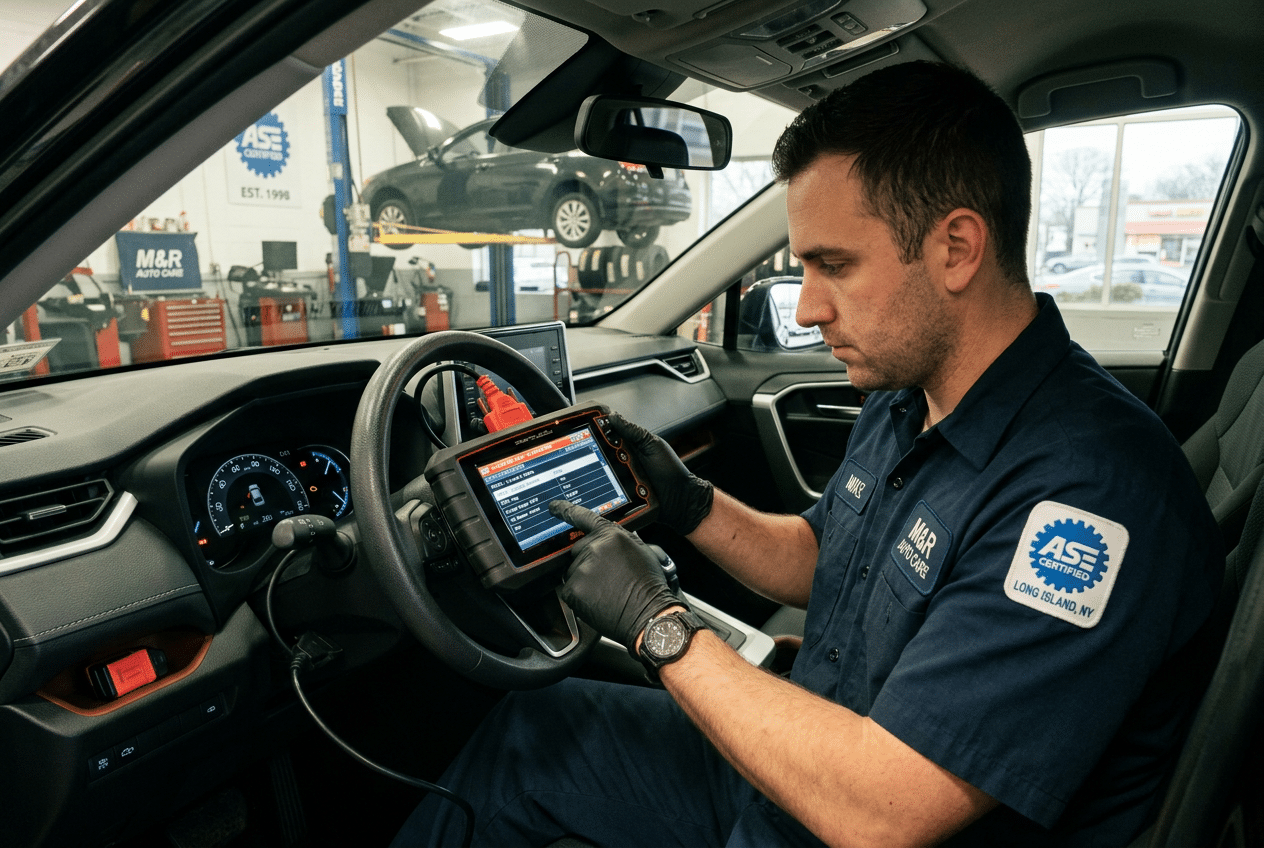
A check engine light tells you that something is wrong, not what. The cause could be a loose gas cap or a misfire that is slowly damaging your catalytic converter. A diagnostic check for cars Long Island drivers book through a professional shop separates the two by reading fault codes, reviewing live data, and testing the systems involved.
This guide walks through each stage of the appointment, from the first conversation with your technician to the repair estimate. You will also learn which symptoms call for testing, what affects the cost, and how to choose a shop for a BMW, Mercedes-Benz, Audi, Volvo, or other vehicle. Knowing the process makes it easier to question a repair that doesn’t match the findings.
What Your Diagnostic Check for Cars Long Island Appointment Covers
A professional diagnostic check for cars Long Island shops perform involves more than plugging in a scanner and reading an error code. It combines electronic testing, visual inspections, and mechanical assessments to determine why your vehicle is experiencing a particular problem.
Modern vehicles contain multiple electronic control modules that monitor different systems. Depending on your vehicle and symptoms, diagnostic testing may examine:
- Engine performance and ignition systems
- Fuel injection and fuel delivery
- Exhaust and emissions components
- Transmission operation
- Battery, alternator, and charging systems
- Sensors and electronic control modules
- Cooling system performance
The exact scope depends on your vehicle’s condition and the symptoms you report. A check engine light may require engine-related testing, while starting problems could involve the battery, starter, alternator, or electrical connections.
How Does a Car Diagnostic Test Work?
A diagnostic appointment generally follows several steps, beginning with an assessment of your concerns and ending with an explanation of the findings and recommended repairs.
1. Initial Vehicle Assessment
Your technician will ask about the symptoms you have noticed, including when they started and whether they happen consistently.
You should mention details such as unusual noises, vibrations, reduced acceleration, warning lights, rough idling, or difficulty starting. Information about recent repairs and maintenance can also help narrow down possible causes.
2. Connecting an OBD-II Scanner
Most modern vehicles have an On-Board Diagnostics II (OBD-II) port that allows compatible diagnostic equipment to communicate with the vehicle’s computer systems.
A technician connects a scanner to retrieve Diagnostic Trouble Codes (DTCs). These codes identify systems or circuits where the vehicle has detected irregularities.
For example, a code may indicate a misfire in one cylinder, an oxygen sensor problem, or an issue with the emissions system.
However, a trouble code does not automatically identify a failed component. It provides a starting point for further investigation.
3. Analyzing Diagnostic Data
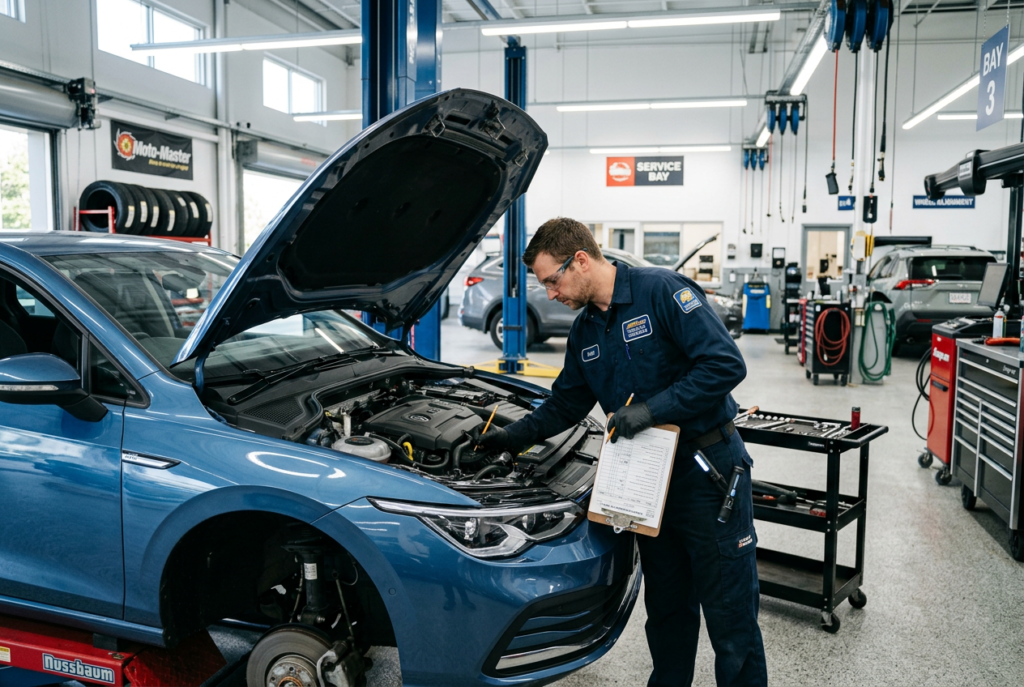
After retrieving the codes, your technician may review live vehicle data, sensor readings, and stored information to understand how the affected systems are operating.
This step helps determine whether a problem involves a faulty sensor, damaged wiring, poor electrical connections, mechanical wear, or another underlying issue.
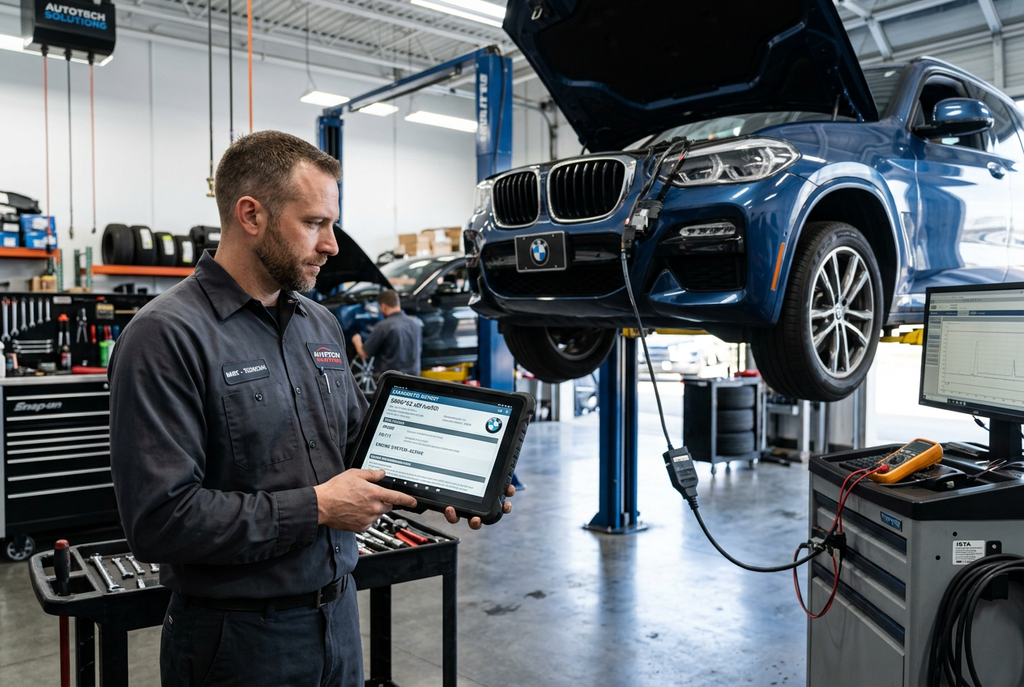
European vehicles such as BMW, Mercedes-Benz, Audi, and Volvo may require manufacturer-specific diagnostic capabilities to examine certain systems and interpret vehicle data accurately.
4. Performing Additional Testing
If the initial scan does not confirm the cause, further testing may be necessary.
Depending on the symptoms, this could include electrical circuit testing, battery and charging system checks, visual inspections, or a road test.
For example, if your engine runs roughly, the technician may investigate ignition components, fuel delivery, and airflow before determining whether a particular part needs replacement.
5. Reviewing the Results and Repair Recommendations
Once testing is complete, you should receive an explanation of the identified problems and the repairs that may be necessary.
A useful diagnostic report should distinguish between confirmed faults, possible causes requiring further investigation, and components that may need attention in the future.
You should also receive an estimate before authorizing additional repair work.
When Should You Schedule a Diagnostic Check?
You should consider professional diagnostic testing when your vehicle displays warning lights, develops unusual driving symptoms, or experiences changes in performance.
Some common warning signs include:
- Check engine light: A steady or flashing warning may indicate an issue involving engine performance, emissions, or another monitored system
- Rough idling: Unstable engine operation may point to ignition, fuel delivery, or airflow problems
- Reduced acceleration: Sluggish performance can indicate engine, transmission, or fuel system concerns
- Unusual vibrations: New vibrations may involve engine mounts, drivetrain components, or other mechanical issues
- Starting difficulties: Repeated starting problems may involve the battery, starter, charging system, or electrical connections
- Poor fuel economy: A noticeable change in fuel consumption may indicate an engine management or mechanical problem
A flashing check engine light needs immediate attention. It usually points to a severe misfire, and a malfunction at that level can damage the catalytic converter, which is an expensive part to replace. Ease off the throttle, avoid towing or hard acceleration, and pull over when it is safe if the car shakes or loses power.
You do not necessarily need a diagnostic test every time you notice a minor change. If a warning disappears and your vehicle operates normally, you can discuss whether testing is necessary during your next maintenance visit. However, recurring warnings and persistent symptoms should not be ignored.
How Much Does a Car Diagnostic Check Cost on Long Island?
The cost of a diagnostic check depends on the vehicle, the complexity of the symptoms, and how much testing is required to identify the problem.
A basic code scan generally involves less work than a comprehensive diagnostic investigation involving electrical testing, live data analysis, or mechanical inspections. European vehicles may also require specialized diagnostic equipment and additional testing procedures.
Several factors can affect your final estimate:
- Vehicle make and model: Different manufacturers use different electronic systems and diagnostic requirements
- Problem complexity: Intermittent electrical faults can take longer to identify than straightforward sensor-related issues
- Testing requirements: Additional circuit testing, inspections, and road tests can increase labor time
- Required repairs: Replacement parts and repair labor are separate considerations from diagnostic work
Before scheduling, ask whether the quoted price covers an initial scan only or a full diagnostic investigation, and whether additional testing costs extra. The FTC’s auto repair guidance also suggests asking whether you will be charged for the diagnosis if you have the repair done elsewhere.
Don’t assume a diagnostic fee includes repairs or that every shop charges the same amount. In New York, a registered repair shop must give you a written estimate for parts and labor if you ask for one, and it cannot charge more than that estimate without your permission.
What Should You Look for in a Diagnostic Repair Shop?
Choosing the right repair facility matters because accurate diagnosis determines whether your vehicle receives the appropriate repair.
When comparing auto repair shops on Long Island, look at their diagnostic equipment, technician credentials such as ASE certification, experience with your make, and how clearly they explain results. New York repair shops must also be registered with the DMV and display their registration certificate inside the shop.
If you drive a European vehicle, look for technicians familiar with its manufacturer-specific systems. A shop that regularly services BMW, Mercedes-Benz, Audi, and Volvo models may be better equipped to investigate problems involving their specialized electronics and performance systems.
You should also look for clear communication. Your technician should explain what the diagnostic codes indicate, which tests confirmed the problem, and why a particular repair is recommended.
An itemized estimate and the opportunity to approve work before repairs begin can also help you maintain control over your maintenance budget.
Common Mistakes to Avoid
A few common mistakes can make vehicle diagnostics more expensive or lead to repairs you didn’t need.
- Replacing parts based on fault codes alone: A trouble code does not always identify the failed component, so request additional testing before approving a replacement
- Ignoring intermittent symptoms: Problems that appear and disappear can still indicate developing faults, so record when they occur and explain the circumstances to your technician
- Clearing warning lights before inspection: Erasing stored codes removes information your technician needs and resets the car’s readiness monitors, which can lead to a “not ready” result at your next New York inspection, so avoid resetting the system before your appointment
- Choosing a shop based only on the lowest scan price: A basic code reading may not include the testing needed to identify the actual problem, so compare the scope of service
- Approving repairs without understanding the estimate: Unclear recommendations can lead to unexpected expenses, so ask which repairs are necessary and which can wait
- Continuing to drive with serious warning signs: Overheating, severe engine misfires, and major changes in braking or steering require prompt attention, so stop driving when necessary and arrange professional assistance
Frequently Asked Questions
Can a Diagnostic Test Find a Problem That Has No Warning Light?
Yes. Some developing mechanical or electrical problems may not trigger a dashboard warning immediately. A technician can investigate unusual noises, performance changes, or other concerns even when no warning light is illuminated.
Will a Diagnostic Test Affect My Car’s Warranty?
No. Having your vehicle diagnosed by an independent repair shop does not automatically void its manufacturer’s warranty. However, warranty coverage depends on the specific repair, maintenance history, and applicable warranty terms. Keep copies of diagnostic reports and repair records for future reference.
Should I Bring Previous Repair Records to a Diagnostic Appointment?
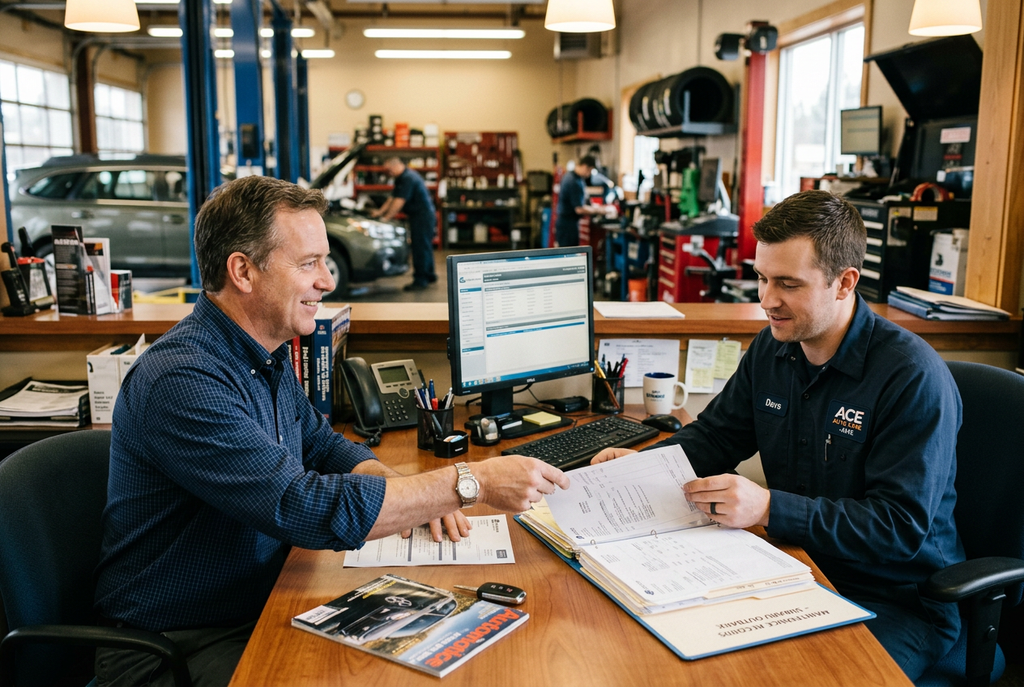
Yes. Previous service records can help technicians understand recurring problems, identify recently replaced components, and avoid repeating unnecessary work. Bring any relevant repair invoices or inspection reports if you have them.
Can Cold Weather Cause Car Diagnostic Problems on Long Island?
Cold temperatures can expose weaknesses in batteries, electrical connections, ignition components, and other vehicle systems. If your car behaves differently during winter, sharing when the symptoms occur can help your technician investigate the issue.
Why Do Some Car Problems Disappear Before I Reach the Repair Shop?
Intermittent problems can occur when a component fails only under particular temperatures, driving conditions, or electrical loads. Even if the symptom disappears, information about when it happened can help technicians reproduce the issue and narrow down its cause.
Schedule Your Diagnostic Check With MB Automotive
A diagnosis is only useful if it confirms the cause before you pay for parts. Fault codes point the technician to a system, testing narrows it to a component, and a clear estimate lets you decide what to repair now and what can wait.
MB Automotive is a European auto repair shop in Bay Shore, NY, serving drivers across Suffolk and Nassau counties. Our ASE-certified technicians work on BMW, Mercedes-Benz, Audi, Volvo, and other vehicles, and our engine diagnostics combine OBD-II scan data with hands-on testing, so the repair we recommend matches the fault we found. When parts are needed, we use OEM and OE-equivalent components.
We explain what we found in plain terms and walk you through the estimate before any repair begins. If your car is showing a warning light or a symptom you can’t pin down, schedule a diagnostic check for cars Long Island drivers can rely on with our team.